
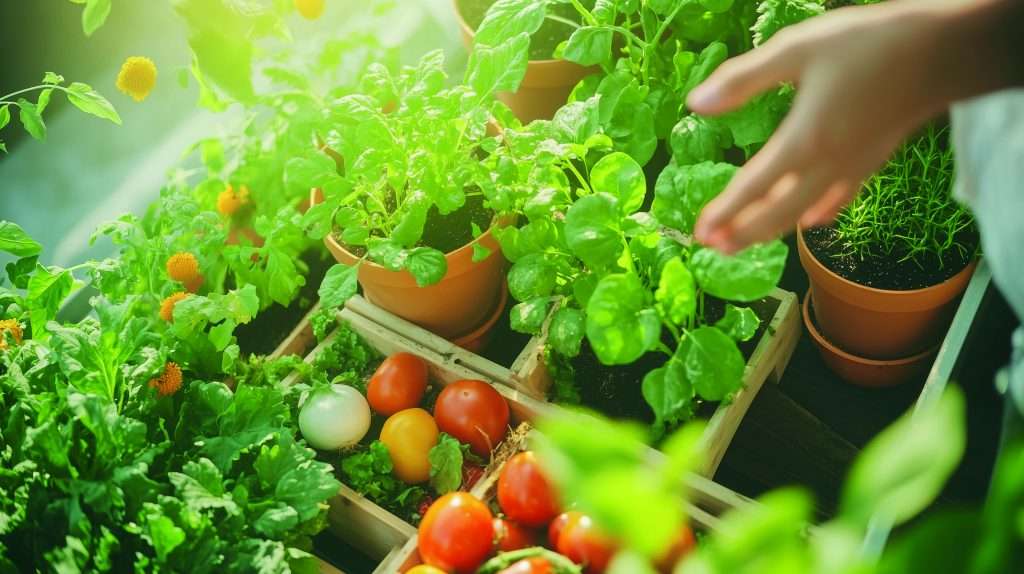
Growing vegetables in small spaces does not mean limited harvests, and you may be surprised by how generous your yield can be, even without a large backyard or any backyard at all. When working within a small space, it is all about choosing the right plants, using vertical space and selecting the right vessels. With a little know-how, it is easy to turn your balcony, patio, rooftop, wall, fence line, courtyard or windowsill into a compact urban garden.
Container choices
Pots of all descriptions, grow bags, window boxes, hanging baskets, raised planter boxes, recycled tubs or crates, anything that can hold potting mix and has drainage holes could be an option when growing vegetables in small spaces.
Growing vertically
Consider the use of trellises, A-frame ladders, wall mounted troughs, pallets, hanging baskets, string line attached to walls and fences for climbing edibles. These methods are ideal for growing vegetables in small spaces.
Potting mix
Use a high-quality potting mix like Rocky Point Organic Potting Mix or Rocky Point Tomato & Herb Potting Mix when growing in containers.
Sunlight
Most vegetables need 6+ hours of sun. If your space is partly shaded, choose plants that tolerate a bit of a lower light situation such as lettuce, spinach, kale, mint, parsley.
What to plant in winter
Alliums including spring onions, leeks and shallots thrive in cooler weather alongside leafy greens like lettuce, rocket, Asian greens and kale. Root crops like beetroot, round carrots and radish are excellent winter growers, while herbs will continue to produce steadily. Climbers like snow peas and beans can be grown in pots with a trellis, making them ideal for growing vegetables in small spaces.
Watering tips
– Water consistently and check often as containers dry out faster than ground soil
– Water deeply and don’t have the pots sitting in saucers of water. Tip excess water out.
– Mulch the top with Rocky Point Lucerne or Sugar Cane Mulch to reduce evaporation, just leave a 5-7cm gap around the plant stems.
Feed your plants
Add slow-release fertiliser such as Rocky Point Tomato, Vegetable & Herb Fertiliser every 3-6 months and supplement with a liquid seaweed every 2–3 weeks.


